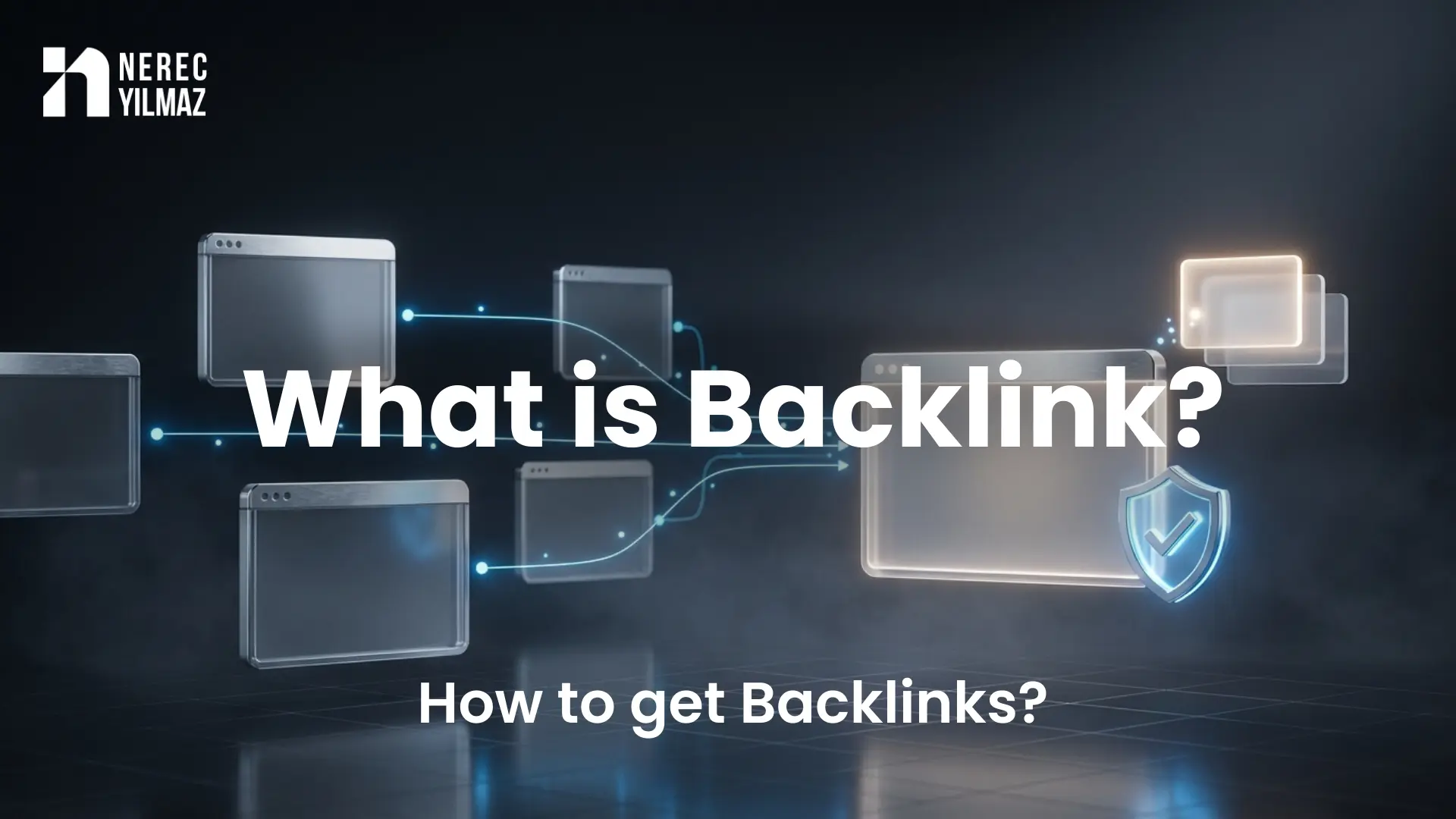
Backlink is a link given to your site from another website, and it helps strengthen the trust–authority signal of your pages in search engines such as Google, Yandex, and Bing. A correct backlink strategy targets not only “visibility in AI answers” but also higher rankings in search results, more organic traffic, and stronger search awareness.
What Is Backlink?
A backlink is another site “referencing” your site. Search engines may interpret a backlink as a piece of content being “found valuable” by another source. Therefore, a backlink is evaluated not only by the number of links, but also by source quality, content context, and naturalness.
Why Is Getting Backlinks Important?
Because as competition in SEO increases, what differentiates similar content is often authority and trust signals. Backlinks can contribute to faster discovery (crawl) of the right pages and to important pages being perceived as an “important source.”
In practice, you generally see the impact of backlinks more clearly in these 3 areas:
- Ranking competition: It signals the question “who is more trustworthy?” among contents written on the same topic.
- Indexing and discovery: Especially for new content, it can help bots find the page faster.
- Brand awareness: Being visible on industry sites accelerates the process of becoming a “searched brand” on the search side.
Relationship Between SEO & Backlink
The relationship between backlinks and SEO is about how search engines interpret “authority.” On Google’s side, backlinks are not everything on their own; but links from the right sources can strengthen the perception that a page is “citable and trustworthy” content. This can help the page position more strongly, especially for competitive queries.
The critical point here is this: when SEO backlink work is done with the goal of “many links,” it can enter a risky path. A more sustainable approach is to move forward with fewer but relevant, editorial, and natural links. Especially “shortcuts” such as “buy backlinks” can cause fluctuations in the long run when they come through low-quality networks.
What Are Backlink Types?
Backlink types are separated both by technical attributes and by how the link is obtained. In a way the user can understand, you can think of it like this: “With what intent was the link given, and how can the search engine read it?”
- Dofollow backlink: The most classic backlink type. It has higher potential to pass signals to search engines and is generally the most sought-after type in SEO-focused efforts.
- Nofollow backlink: Although it is thought “it doesn’t always work,” it is valuable especially for visibility, traffic, and a natural profile. Also, nofollow links from strong publications can indirectly support brand trust.
- Sponsored / UGC: These are link types marked for paid collaborations or user-generated content. Proper tagging is important for the profile to look natural and for risk management.
- Editorial backlink: Because the content is truly useful, a publication/author cites you as a source. It is one of the most valuable backlink types because it comes naturally and within context.
- Guest post backlink: It works well if it is done with the right publication selection and content that truly adds value; but if it is done with template content and on irrelevant sites, it can be perceived as an “artificial link.”
Directory / guide backlink: Being listed in industry guides (that provide real value to the user) is valuable. But spam directories are generally weak and can be risky.
How to Get Backlinks?
The most sustainable method is to first produce “link-worthy” content and then distribute it to the right people/places. Getting backlinks is actually most of the time the trio of content + distribution + relationship management.
Actionable methods:
- Produce a linkable asset (link-worthy content)
Mini research with statistics, comprehensive guides, templates/checklists, comparisons, content containing industry data seriously increases the probability of getting backlinks.
- Digital PR and publication relationships
Sharing newsworthy insights with industry publications produces natural and strong backlinks. The goal here is not “begging for links,” but offering valuable content for the publication.
- Unlinked mention (brand mention without a link)
Finding pages that mention your brand/name but do not give a link and politely requesting a link is generally one of the fastest gains.
- Broken link method
Detecting broken links on resource pages in the industry and proposing your relevant content as an alternative is win-win: beneficial for the publisher and for you.
- Partner & customer ecosystem
Creating “natural reference” links on pages such as business partners, customers, solution providers, event pages is both safe and sustainable.
The “buy backlinks” approach: Although it may look like a short-term numerical increase, low-quality networks and template publications can create risk. If paid work is to be done, managing it with a “PR/advertorial” mindset and proper tagging (sponsored) is healthier.
What Are Backlink Checker Tools?

Backlink checker tools are used to read your link profile and compare competitors; but deciding by looking at only one tool can be misleading. Especially when doing backlink querying, checking from two different sources gives healthier results.
- Ahrefs Backlink Checker: One of the industry standard tools for link discovery, referring domain analysis, and competitor comparison. The free checker provides limited information; deep analysis is generally on the paid side.
- Semrush Backlink Analytics: Useful for tracking competitor backlink profile, new/lost links, and general quality signals. It is especially easy to read changes after a campaign.
- Moz Link Explorer: It provides the big picture with metrics such as domain authority; it is ideal for a quick “is the profile healthy?” check.
- Google Search Console: It allows you to see links coming to your site from an “official source.” Its data may not be as broad as some tools, but it is valuable in terms of accuracy.
Conclusion
When planned correctly, backlinks are one of the strongest levers to gain authority, traffic, and search visibility in SEO; when implemented with wrong methods, they can create risk and volatility. If you are evaluating points such as “backlink service” and “backlink prices” but do not know how to measure quality; with a site-specific backlink consultant approach, we can design publication selection, content assets (linkable assets), outreach texts, and backlink checker reports together and build a stronger structure than your competitors in organic.
FAQ
What does backlink mean?
A backlink is an external link given to your site from another website.
What is a backlink used for?
When it comes from the right sources, it creates a trust–authority signal, helps pages be discovered, and can support ranking strength in competitive queries.
What is the difference between backlinks and internal links?
Backlinks come from external sources and carry authority/trust signals; internal links connect pages within the site, strengthen site architecture, and distribute authority across pages.
How is backlink quality evaluated?
Backlink quality is evaluated by the reliability of the source, content relevance, link placement (editorial or template), anchor distribution, and the naturalness of the profile. The “few but high-quality” approach generally delivers more sustainable results.